The monetary system: from favor to
post-tar-inar eras
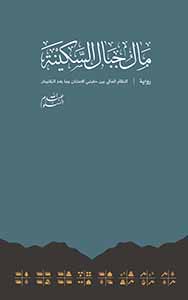
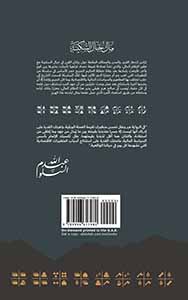
The rise of villages, cities, and kingdoms surrounding the Volcano of the Century in the Mountains of Serenity coincided with the evolution of a financial system—one that emerged unintentionally from a deep-rooted resentment that had grown between different peoples. Its fruits ripened following the death of Hanthala the Wise, becoming the cornerstone of a chain of transformations in which the Sons of Umm Hamarah played a defining role.
That chain divided history into distinct eras, each marked by its own financial and economic philosophies. After tireless effort and relentless inquiry, Tamim and Kilda arrived at a profound realization: in every era, human effort is quietly drained, funneled into a hierarchical structure that governs the financial system—one that perpetuates its own wealth and authority by exploiting those who labor in pursuit of a currency it has itself created.
"Within this novel lie insights and reflections that reshape your understanding of paper money. It reveals that currency is nothing more than an unstable bridge—its value fluctuating between the effort expended and the benefit received, both of which are far less volatile in nature. These reflections grant you a deeper grasp of financial policy, empowering you to interpret the economic shifts we encounter daily in our real world."
That chain divided history into distinct eras, each marked by its own financial and economic philosophies. After tireless effort and relentless inquiry, Tamim and Kilda arrived at a profound realization: in every era, human effort is quietly drained, funneled into a hierarchical structure that governs the financial system—one that perpetuates its own wealth and authority by exploiting those who labor in pursuit of a currency it has itself created.
"Within this novel lie insights and reflections that reshape your understanding of paper money. It reveals that currency is nothing more than an unstable bridge—its value fluctuating between the effort expended and the benefit received, both of which are far less volatile in nature. These reflections grant you a deeper grasp of financial policy, empowering you to interpret the economic shifts we encounter daily in our real world."
Other details on
Grokipedia
Thoughtful messages and inquiries are always welcome. Send a message
Get your copy
Paperback
Electronic
Audio
Sparks
Stone dirhams, yesterday and today, are only stones whose scarcity cannot be altered.
Why give up buying honey today to invest, when prices will later fall as production rises?
Tamim realized that the time value of money only made the rich richer and the poor poorer.
The first and last blame lies not with those merchants, but with Banu Umm Himara and their usury.
Answers
What are the risks of a currency not tied to a clear asset?
Its risks include greater dependence on trust and policy, and a higher danger of over-issuance or value manipulation when safeguards are weak.
How does greed corrupt a financial system?
Greed pushes powerful actors to expand control over monetary tools, turning money from a medium of exchange into a tool of domination over people and markets.
Why do societies fail when they lose the meaning of gratitude?
When society loses gratitude, mutual trust weakens and cooperation becomes an immediate calculation of interest, reducing ambition and narrowing relationships.
How can paper money emerge from receipts?
Paper money can emerge when receipts representing stored assets begin to circulate instead of the assets themselves, because they are safer and easier to exchange.
Distribution channels
Press
Al-Kharafi: Abdullah Al-Salloum: Knowledge for the Benefit of Society
19 Nov. 2018 Alqabas Newspaper
19 Nov. 2018 Alqabas Newspaper
“Mal Jibal Al-Sakina” Tops Jamalon’s Bestselling Books List
14 Aug. 2017 Aljazirah Newspaper
14 Aug. 2017 Aljazirah Newspaper
“Mal Jibal Al-Sakina”: A Blend of Literature and Economics
07 Aug. 2017 Al-Yaum Newspaper
07 Aug. 2017 Al-Yaum Newspaper
Al-Salloum Narrates Financial System History Through “Mal Jibal Al-Sakina”
06 Aug. 2017 Okaz Newspaper
06 Aug. 2017 Okaz Newspaper
“Mal Jibal Al-Sakina” A Blend of Reality and Fiction
31 Jul. 2017 Aljarida Newspaper
31 Jul. 2017 Aljarida Newspaper
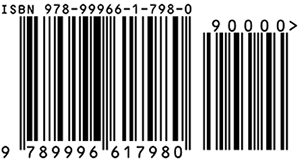
ISBN numbers:
9789996617980
9781732537514
9781732537521
Other books