The throne advocating for fair wealth distribution
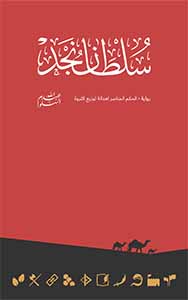
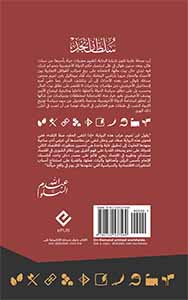
At times, a fleeting coincidence becomes the spark that transforms the course of an entire life. After a long slumber, and years under the continued rule of the Ukhaydirid state—unaware of the gradual decline of its treasury, which relied heavily on the revenues of caravan taxes between Al-Ahsa and the Hijaz, passing through the lands of Al-Yamamah—a chance encounter between Mikhail and Ibn Tamim sets events into motion. One after another, developments unfold until the hidden truths are revealed to Ismail Al-Ukhaydiri—conspiracies and consequences that extend far beyond the treasury, reaching into the very core of the state’s domestic and foreign policies.
With little choice, Prince Yusuf Al-Ukhaydiri is compelled to yield to a set of strategies and policies aimed at securing the sustainability of the state—anchored in reforming the flawed distribution of wealth, redirecting it toward the working layers of society rather than concentrating it at the top of the hierarchical structure.
"As Ibn Tamim—the architect of this narrative—declares: “When resentment fades, critique becomes clear.” Within this novel lies a clarity of insight and reasoning, free from ulterior motives, devoted to a singular purpose: to reshape your understanding of macroeconomics at the level of the state. It equips you with the ability to distinguish between a consultative system within a sustainable economy and its counterpart in a rent-based economy dependent on a single source of income. In doing so, it grants you a deeper grasp of the foundations of economic visions—their goals, mechanisms, and dynamics—enabling you to interpret the economic and political changes we witness every day in our reality."
With little choice, Prince Yusuf Al-Ukhaydiri is compelled to yield to a set of strategies and policies aimed at securing the sustainability of the state—anchored in reforming the flawed distribution of wealth, redirecting it toward the working layers of society rather than concentrating it at the top of the hierarchical structure.
"As Ibn Tamim—the architect of this narrative—declares: “When resentment fades, critique becomes clear.” Within this novel lies a clarity of insight and reasoning, free from ulterior motives, devoted to a singular purpose: to reshape your understanding of macroeconomics at the level of the state. It equips you with the ability to distinguish between a consultative system within a sustainable economy and its counterpart in a rent-based economy dependent on a single source of income. In doing so, it grants you a deeper grasp of the foundations of economic visions—their goals, mechanisms, and dynamics—enabling you to interpret the economic and political changes we witness every day in our reality."
Thoughtful messages and inquiries are always welcome. Send a message
Get your copy
Paperback
Electronic
Sparks
What we see in Yamama is only consumption and spending from the taxes collected from caravans.
How can I entrust my people’s security to leadership lacking wisdom and justice among nobles?
What affects welfare is not wage cuts or increases, but how far a wage is from the average.
May God condemn speech without knowledge; how strange when a merchant speaks on the nation’s economy.
Answers
Why can pride in the past be dangerous without criticism?
Pride in the past becomes dangerous when it prevents people from seeing defects. A nation does not rise by glorifying its image alone, but by examining both its strengths and weaknesses.
How does an economy of rent distribution differ from an economy of value creation?
An economy of rent distribution depends on income from a resource not created by society’s productivity. An economy of value creation depends on work, trade, industry, and knowledge that generate renewable income.
How do crises reveal a person’s character?
Crises place a person between anger and wisdom, revenge and construction. In moments of trial, it becomes clear who seeks justice and who uses pain as an excuse to transgress.
How can trade support sustainability?
Trade supports sustainability when it is tied to local production and added value, not merely the passage of others’ goods. Real trade broadens income and creates skills and opportunities.
Distribution channels
Press
“Sultan of Najd” Ranked Third Among Bestselling Books on Amazon
22 Aug. 2020 Alqabas Newspaper
22 Aug. 2020 Alqabas Newspaper
“Sultan of Najd”: A New Economic Novel by Al-Salloum
18 Aug. 2020 Alqabas Newspaper
18 Aug. 2020 Alqabas Newspaper
Al-Kharafi: Abdullah Al-Salloum: Knowledge for the Benefit of Society
19 Nov. 2018 Alqabas Newspaper
19 Nov. 2018 Alqabas Newspaper

ISBN numbers:
9781732537569
9781732537576
Other books