Kuwaiti Economy: Challenges and Opportunities in a Changing Era
Related content under this topic
A curated collection of articles, publications, studies, events, and media content related to kuwaiti-economy.
An analysis of Kuwait’s economy, addressing oil dependence, fiscal challenges, and opportunities for diversification and sustainable growth.
The Kuwaiti economy stands as one of the region’s most prominent oil-based economies, with hydrocarbons serving as the primary source of public revenue and economic activity for decades. This reliance has enabled high income levels and strong welfare systems, but it has also exposed the economy to volatility in global oil markets and shifting economic conditions.
In recent years, the urgency of economic restructuring has become increasingly clear. Diversifying income sources and strengthening the role of the private sector are now central priorities. Key challenges include achieving fiscal sustainability, managing public spending, and addressing structural issues such as labor market dynamics, productivity levels, and the efficiency of government expenditure.
At the same time, Kuwait possesses significant strengths that can support its transformation. These include strategic geographic positioning, substantial financial reserves, and institutional foundations, as well as human capital with strong development potential. Efforts toward digital transformation, infrastructure development, and improving the business environment are opening new pathways for growth beyond the oil sector.
The future of Kuwait’s economy depends on the effective implementation of structural reforms and the adoption of adaptive economic policies. The challenge is not the availability of resources, but how they are managed and transformed into sustainable value that secures long-term prosperity for future generations.
In recent years, the urgency of economic restructuring has become increasingly clear. Diversifying income sources and strengthening the role of the private sector are now central priorities. Key challenges include achieving fiscal sustainability, managing public spending, and addressing structural issues such as labor market dynamics, productivity levels, and the efficiency of government expenditure.
At the same time, Kuwait possesses significant strengths that can support its transformation. These include strategic geographic positioning, substantial financial reserves, and institutional foundations, as well as human capital with strong development potential. Efforts toward digital transformation, infrastructure development, and improving the business environment are opening new pathways for growth beyond the oil sector.
The future of Kuwait’s economy depends on the effective implementation of structural reforms and the adoption of adaptive economic policies. The challenge is not the availability of resources, but how they are managed and transformed into sustainable value that secures long-term prosperity for future generations.
Thoughtful messages and inquiries are always welcome. Send a message
Articles

Sep. 2026
Ensuring quality borrowing as financing capacity expands between the public-debt ceiling and the Future Generations Fund.

Aug. 2026
As compliance takes effect and alternatives lag, dispersed capital awaits a credible vision for a new private-sector model.

Aug. 2026
A look at the foreign investor’s logic, where strategies may converge even as the goals of returns and sustainability diverge.
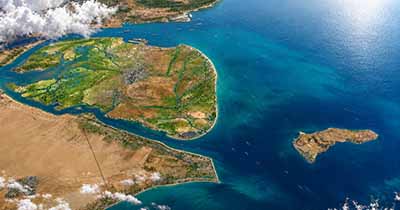
Jul. 2026
A reading of the state’s final accounts for fiscal year 2025/2026.
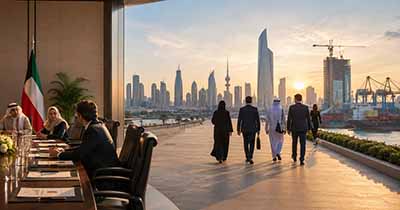
Jun. 2026
A reflection on the course of governance and accountability, and its effect on broader paths more closely tied to the attainment of purpose.
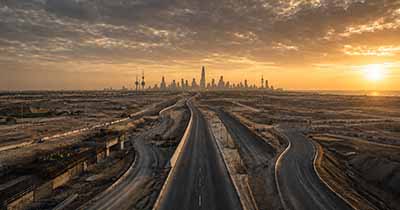
Jun. 2026
A reflection on why national reform needs a unifying vision and governance that aligns policy tracks, lest quick fixes become the ceiling of reform.
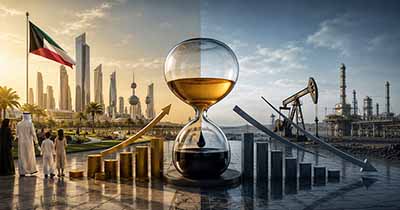
May. 2026
A reflection on the Gulf’s future through energy surplus, beyond oil prices, production volumes, and the usual post-oil debate.
May. 2026
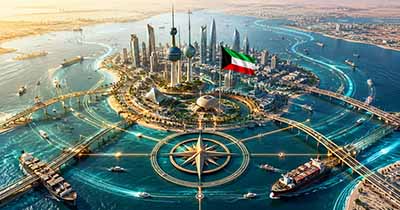
Kuwait’s sovereign positioning amid great-power rivalry, turning geography, trust and strategic partnerships into instruments of national purpose.

Nov. 2025
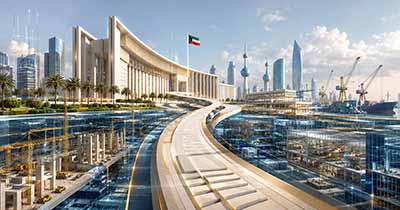
A careful reading of Kuwait’s credit rating upgrade, showing what it affirms in terms of financial strength—and what it overlooks of an economic core without which reform cannot stand.
Nov. 2025
A reading that anticipates the market as the state moves beyond the ‘triad of stagnation’ toward the ‘quadrant of sustainability,’ warning merchants that the era of easy profit has ended—and that the age of those equipped with the ‘sevenfold toolkit’ has arrived.

Nov. 2025
An approach that sees the contraction of consumer spending not as a crisis, but as a reformative silence—through which trust and balance are rebuilt among the state, the market, and the collective mind.

Nov. 2025
A reading of how importation has become a doctrine that weakens will and undermines production, calling for the restoration of sovereignty through a value-based balance that honors work and elevates contribution.

Nov. 2025
A proposal for a national export output registry to guide production, imports, exports, investment, and Kuwait’s economic sovereignty.
Oct. 2025
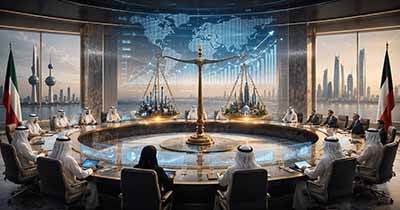
An analysis advocating a Supreme Economic Council to unify vision, streamline decisions, and overcome administrative fragmentation for a more coherent state.

Oct. 2025
A call for economic foresight to guide Kuwait’s decisions before crises emerge, unifying analysis, early warning, and national vision.

Sep. 2025
A critique of Kuwait’s National Fund law, calling for clearer economic, institutional, and administrative standards to enable productive growth.

Sep. 2025
A proposal for Kuwait’s “triple economy” strategy: present, transformation, and future economies converging toward Vision 2035.
Aug. 2025
A proposal for a Kuwaiti authority to support non-oil export output, productivity, private-sector independence, and sustainable growth.
Aug. 2025
A proposal for a Welfare strategy and public authority to measure real living standards beyond wages, linking income, prices, culture, and access.
Aug. 2025
A proposal to link Kuwait’s public debt ceiling to productive capacity, non-oil exports, and investment for sustainable fiscal policy.
Apr. 2020
A call to approve Kuwait’s Public Debt Law only with a binding plan to grow non-oil revenues through export output and investment.
Feb. 2020
A critique of Kuwait’s leaked financial plan, warning that salary reform, currency strengthening, privatization, and nationalization lack integration.

Feb. 2020
An analytical framework for defining vision, transition gaps, and the time and state measures required for national development planning.
Feb. 2020
A critique of Kuwait’s rentier culture and a call for “Kuwait of Sustainability,” linking individual incentives to national economic reform.
Feb. 2020
A critique of power, patronage, and perceived injustice within Kuwait’s administrative hierarchy and their effects on politics and society.
Feb. 2020
An analysis of how oil-rent dependence weakened productivity, reshaped incentives, and built an unhealthy administrative hierarchy in Kuwait.
Feb. 2020
An explanation of Kuwait’s rentier economy and how oil-export dependence transmits financial shocks across public and private sectors.
Feb. 2020
An argument that Kuwait’s corruption and governance problems are rooted in a wider macroeconomic dilemma requiring structural solutions.
Feb. 2020
A critique of polarized loyalty and opposition in Kuwait, arguing that systemic flaws—not individuals alone—enable corruption and decline.
Sep. 2019
A critical study of Kuwait’s SME Fund Law, its broad interpretation, economic impact, and reforms needed to refocus it on productive growth.
Sep. 2019
An introduction to “Kuwait of Sustainability,” challenging rentier economics and calling for deeper public awareness of true economic reform.
Sep. 2019
A call for Kuwait to move from rentier dependence to sustainable productivity through macroeconomic reform, human empowerment, and cultural change.
Sep. 2019
A study of Kuwait’s controllable and uncontrollable fiscal variables, warning that oil dependence cannot sustain the economy without policy change.
Nov. 2018
An explanation of economic sustainability in Kuwait and the need to shift dependence from oil exports to productive private-sector exports.
Feb. 2018
A critique of Kuwait’s entrepreneurship support, arguing that incentives should favor export-driven ventures over rentier consumer projects.
Books

Vision of a people, shaped from within
20 Nov. 2018
A political-economic book focusing on the Kuwaiti economy, introducing the concept of a sound economic vision based on structural solutions targeting macroeconomic challenges. The book distinguishes between macroeconomics and microeconomics, emphasizing that micro-level reforms alone cannot achieve overall sustainability. It received official attention, with a copy presented to the then Prime Minister, His Highness Sheikh Jaber Al-Mubarak Al-Sabah.
Answers
Sparks
Studies
12 Sep. 2020
A comparative economic analysis evaluating the effectiveness of stimulus packages during the COVID-19 period, with a focus on explaining disparities in their "generosity" across countries and their implications for Kuwait’s economy. The study approached the issue from a macroeconomic perspective, demonstrating the limited impact of such stimulus measures in a rentier economy that lacks a productive, export-driven private sector. It showed that liquidity injections do not necessarily translate into real value creation or sustainable growth under such structural conditions. The analysis further linked GDP composition to income sources, highlighting how the weak contribution of non-oil exports constrains the effectiveness of fiscal stimulus. The study concluded that meaningful reform requires transitioning toward an export-led economic model rather than relying on short-term stimulus policies.
18 Feb. 2020
A comprehensive macroeconomic analysis uncovering the true structural causes behind Kuwait’s persistent budget deficits, moving beyond conventional narratives centered on waste or corruption. Developed an Economic Model of the State to illustrate the interaction between the government and private sector, highlighting the economy’s heavy reliance on oil revenues and the limited contribution of non-oil exports. The study further examined revenue and expenditure dynamics, distinguishing between internally controllable and uncontrollable factors, and introduced the concept of “book deficit” versus “real deficit.” It concluded that the core issue lies in the continuation of a rentier economic model, proposing a reform framework centered on transitioning toward a sustainable, export-driven economy with greater control over internal economic variables.
15 Sep. 2019
A a critical analytical study assessing the impact of the broad scope of the National Fund for SMEs law on economic direction in Kuwait, with a focus on how flexible legal interpretation affects project selection and financing outcomes. The study identified structural inefficiencies stemming from the absence of clear economic criteria—particularly the weak linkage between funding decisions and productivity indicators such as non-oil exports. It further introduced an analytical model of Kuwait’s economic structure, highlighting the imbalance between public and private sector dependency. The study concluded with a set of legislative and institutional recommendations aimed at realigning the fund toward generating real economic value and supporting a transition to a sustainable, export-driven economy.
06 Aug. 2019
An advanced economic report examining the impact of externally uncontrollable variables on Kuwait’s economic performance and fiscal sustainability, introducing a conceptual framework that distinguishes between “within-scope” and “out-of-scope” variables in both revenue and expenditure equations. The study employed statistical time-series analysis of public finance data, demonstrating that heavy reliance on oil revenues—an uncontrollable variable—is structurally matched by the continuous growth of consumptional expenditures driven by demographic factors beyond policy control. It further revealed that the core issue lies not in the apparent deficit itself, but in the exponential dynamics of these variables. The report concluded with a reform-oriented framework emphasizing the need to strengthen non-oil revenues and reduce dependency on uncontrollable factors, enabling a transition toward a more sustainable and self-directed economic model.
Legislations
09 Jun. 2026
A calm analytical space for reading Kuwait’s economic, administrative, and institutional policy paths — beyond daily headlines, and through the deeper trends that reveal the state’s ability to turn wealth, institutions, and public trust into lasting national capacity.
17 Oct. 2021
A strategic draft law to enhance non-oil export output of the private sector, aimed at reducing reliance on oil revenues and supporting economic diversification and sustainability. Designed an integrated institutional framework, including the establishment of an independent public authority and the development of economic indicators to measure private sector contribution and reduce dependency on government expenditure. The draft was submitted to the Office of His Highness the former Prime Minister and was adopted by several member of the parliament in their economic conferences, reflecting its impact on advancing economic reform discourse.
Developments
Academics
Speeches

Kuwait Lawyers Society Kuwait
Jan. 2020 ±50
Jan. 2020 ±50

National Union Of Kuwaiti Students Colorado, United States
Feb. 2019 ±500
Feb. 2019 ±500
Workshops
Interviews

Fnjan Podcast, Thmanyah Publishing & Distribution
Jan. 2022
Jan. 2022

Deera Program with Dr. Hessa Al-Mulla
Nov. 2020
Nov. 2020

Hadith Al-Tanmia Program, Radio Kuwait
Aug. 2020
Aug. 2020

Independent Interview with Dr. Ahmed Al-Rashidan
May. 2020
May. 2020

Hayatuna Program, Radio Kuwait
Dec. 2019
Dec. 2019

Youth Perspectives Program, Radio Kuwait
Apr. 2019
Apr. 2019
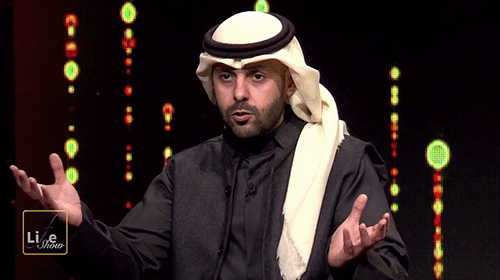
Life Show Program, Al Rai TV
Feb. 2018
Feb. 2018
Press
11 Jun. 2026 Aljarida Newspaper
11 Jun. 2026 Kuwait News
11 Jun. 2026 Alqabas Newspaper
13 Sep. 2020 Independent Arabia
07 Sep. 2020 Al Jazeera Net
20 Aug. 2020 Al Khaleej Online
18 Jun. 2020 Al Khaleej Online
31 Dec. 2019 Alqabas Newspaper
18 Dec. 2019 Alqabas Newspaper
24 Nov. 2018 Alqabas Newspaper
20 Sep. 2018 Kuwait Times
Videos

Live and recorded throughout the media
Nov. 2020
Nov. 2020
Live and recorded throughout the media
Jan. 2020
Jan. 2020

Live and recorded throughout the media
Dec. 2019
Dec. 2019

Live and recorded throughout the media
Jan. 2019
Jan. 2019

Live and recorded throughout the media
Sep. 2018
Sep. 2018

Live and recorded throughout the media
Feb. 2018
Feb. 2018

Live and recorded throughout the media
May. 2017
May. 2017

Live and recorded throughout the media
Feb. 2017
Feb. 2017

Live and recorded throughout the media
Nov. 2016
Nov. 2016

Live and recorded throughout the media
May. 2016
May. 2016

Live and recorded throughout the media
Mar. 2016
Mar. 2016
Challenges